Directory Guide
Build a Directory Site That Does Not Look Stamped From a Template
A directory is four decisions and a lot of typing. Make the decisions first, give every page something only its own record could say, and never start by copying the last site.
- Year 1Website
- Year 2Map Listings
- Year 3Booking Tool
- Year 4Front Desk
- Year 5Payments
- Year 6Reports
Same six pieces.
Years of lessons, one read.
Free to read. Most of this guide is open. The finishing pieces at the end come to you when you opt in.
The Short Version
- Thin pages and a shared footprint are two different risks with two different fixes.
- Decide what a record is, and how many sides the site has, before you write any HTML.
- A listing page's opening lines must come from that record's own data.
- City pages earn their place with real counts and real differences, not a swapped city name.
- Paths, class names, title formulas and page skeletons should differ from every sibling site.
Two Risks That Get Mixed Up
People who build more than one directory worry that the sites look alike. That worry is really two worries, and they have different fixes.
The first is thin content. A thousand pages that say the same sentence with the city swapped is what gets a site ignored by search engines, or worse. A new color scheme does not fix that. The fix is that every page shows something worked out from its own record that no other page could say.
The second is a shared footprint. If two sites use the same paths, the same class names, the same title formula and the same page skeleton, anyone who compares them sees the same builder in a minute. That ties the sites together. The fix is to plan each site's shape on its own.
Do both or neither is worth much. A site with its own look and thin pages still fails. A site with rich pages that is a clone of its sister still gives the network away.
Decide What a Record Is First
A directory is not always a list of businesses. Before any HTML, answer two questions. How many sides does the site have? And what is the page?
- One side. A roster of businesses, like repair shops. The shop is the page. A visitor looks, calls and leaves. Nobody signs in but the owner who claims a listing.
- Two sides. A site with two kinds of real things, like rental rigs and the campgrounds they park at. Both are pages. An owner and a renter both sign in.
- A catalog. A library of things, like manuals or parts. The thing is the page and a business may not appear at all.
These shapes want different tables, different menus, different schema and different ways to make money. No amount of styling turns one into another. Get this wrong and every later choice is wrong with it, so spend real time here.
Write the answer down as an entity list. Name each kind of record, the fields it has, what it links to, and which one is the page. That list is the plan the rest of the build follows.
Pick a URL Spine That Fits the Search
The URL spine is the order of the parts in your paths. It should match how people search in your trade.
- If people search by place first, use a place spine.
/texas/austin/brake-repair/ - If they search by service first, lead with the service.
/brake-repair/austin-tx/ - If each record is famous on its own, give it a short path of its own.
/shops/example-auto-care/
Pick one spine and keep it. Give every record exactly one path. End every path with a slash. Do not let a record live at two addresses, because search engines then have to guess which one counts.
Avoid the paths every directory kit ships with. If your last three sites all had a find page, a claim page and a badges page at the same paths, this one should not. Name the pages after what this site's visitors do. A site for campers might have a page to list your rig. A site for shops might have a page to add your hours.
What a Listing Page Must Say
The listing page is the page. Its opening lines must come from the record, not from a template with the name dropped in. Here is what a good one carries.
- What this place does, in its own terms, from its own service list.
- Where it works, as real towns or a real radius, not the whole state.
- Hours, phone and address, pulled from one source and checked.
- What is verified and what is not, with the date it was last checked.
- Something computed, like the nearest three other listings or how its hours compare to the area.
- A clear next step. Call, get a quote or claim the listing.
Then run the paste test. Take the opening paragraph from three listing pages. Paste each one under the other two records. If it still reads true, the copy is a template and the page is thin. Rewrite until it would be false anywhere else.
Never invent a rating, a review or a count. If you do not have reviews, show none. An empty space is fine. A made up number is the thing that gets a site killed.
What a City Page Must Say
A city page is useful when it helps someone choose. It is thin when it is a list with a paragraph about the city on top.
- The real number of listings in that city, counted from your data.
- How the choices differ. Who is open late, who does mobile work, who covers which side of town.
- Nearby cities with their own real counts, linked.
- A short answer to the question people in that city actually ask.
Set a floor. Say a city has only one listing. That page has little to offer, so mark it noindex until it has more. Publishing it anyway adds a thin page to your site for no gain.
For how a city page earns a ranking, read city pages that rank.
Give Each Site Its Own Footprint
The footprint is what a stranger compares. Six things give a network away:
- The same distinctive paths.
- The same CSS class names.
- The same page title formula.
- The same HTML skeleton, in the same order.
- The same boilerplate sentences in the footer or the about page.
- The same phone number or analytics id.
The cheapest way to vary these is a roll. Hash the domain name, and use the hash to pick the spine, the class prefix, the title formula, the card layout, the nav style and the fonts from lists you keep. Because the roll comes from the domain, a rebuild next year gives the same site back. Then reject any pick that matches a sibling in the same trade or city, and roll that one again.
One rule matters more than the rest. Never start a new directory by copying an old site folder. The copy is how sites end up sharing paths, classes and forms. Write the build for this site from its own plan. It takes a few more hours, and those hours are the whole point.
Data Rules That Keep a Site Alive
Four rules, each learned the hard way.
- Match records by an id, never by name. Two shops can share a name. Names change.
- Merge duplicates on the phone number. One business listed twice splits its visitors and looks sloppy.
- Never invent a review, a rating or a count.
- Mark every placeholder fact so it blocks launch. A test phone number that ships is a real number someone will call.
Send leads and claims out through one clean seam. The site posts one lead or one claim to one endpoint and stops. Give each one a key the site makes, so the same lead sent twice can be merged. Then submit a real test before launch and delete the row. A form that renders is not a form that captures.
What the Finishing Pieces Contain
With the sections above you can plan and build a directory that stands on its own. The finishing pieces give you the planning interview we use, word for word. They include a working Python roll that picks a site's look from its domain, and a footprint checker you can point at two built sites today. They close with the launch checklist that catches thin pages and shared parts before anyone else does. Next, see how we run this at scale in the directory factory build.
The finishing pieces
Get the Rest of This Guide
You have the method. The finishing pieces are the parts you copy straight into your own work:
- The Planning Interview, Word for Word
- A Style Roll That Gives the Same Answer Every Time
- A Footprint Checker You Can Run Today
- The Launch Checklist
Questions People Ask
Can I reuse my last directory's code to save time?
You can reuse small tools, but do not copy the site folder. The copy carries the same paths, class names and forms, and that is what ties the sites together. Build the new site from its own plan.
Will a different theme stop my pages from looking thin?
No. Thin content is about what the page says, not how it looks. Each page needs lines worked out from its own record that would be false on any other page.
Should I publish a city page with only one listing?
Publish it for visitors if you like, but mark it noindex until the city has enough listings to help someone choose. A page that only lists one place gives search engines little reason to show it.
Is it okay to show star ratings from somewhere else?
Only if you have the right to use them and they are real for that exact record. Never invent or estimate a rating. If you have none, show none.
Keep Going
Build · DirectoriesThe Directory Factory That Never Stamps the Same Site Twice
The directory factory turns a short interview into a new directory in any industry. Each one is built with its own data model, URL layout, fonts and page shape, so a network of sites does not share one footprint.
Read it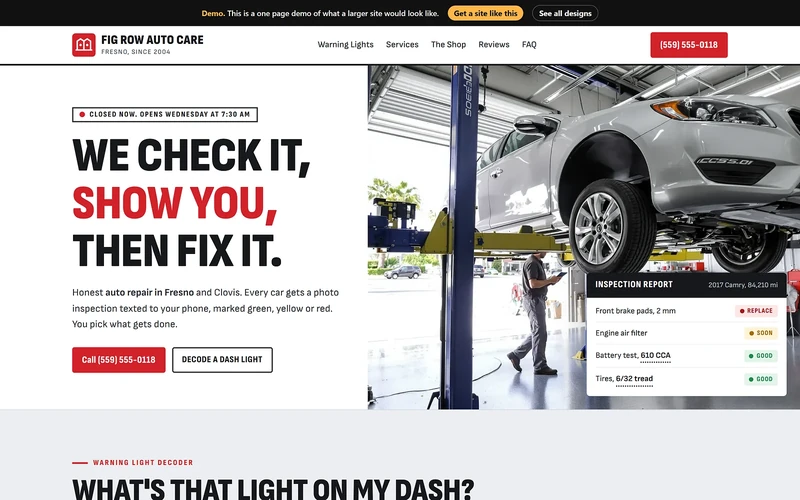 Free guideLocal SEO Guide
City Pages That Rank Without Being Spam
A city page ranks and holds up when the facts on it change with the city, not just the city name. Give each page who covers the area, how long it takes to get there and what goes wrong there, then answer local questions in a visible FAQ with matching schema.
Read it Build Layer
Static Site Builds With Plain Python
Every site we run is written by one Python script that uses only the standard library and outputs plain HTML. A checker reads every page after each build and stops a broken link before a customer finds it.
Read itWe sell time
Get Years of Building Switched On in Hours
A thirty minute call. A written price. Nothing built until you say yes.